


.png)
Outline
Subscribe to our newsletter!
Receive exclusive updates on Wiremind's products, customer stories, and all upcoming events.
Follow Us


Product Management at Wiremind: Aligning Methodology with Industry Realities
Building software for highly specialized users goes beyond standard product management frameworks. It demands deep vertical expertise and a focus on the specific technical realities and day-to-day challenges of the markets they are built for.
True product excellence at Wiremind comes from this domain-specific knowledge, allowing our teams to adapt a core methodology into precise, practical solutions.
To see how this works in practice, we sat down with three of our Product Owners to look at their day-to-day operations:
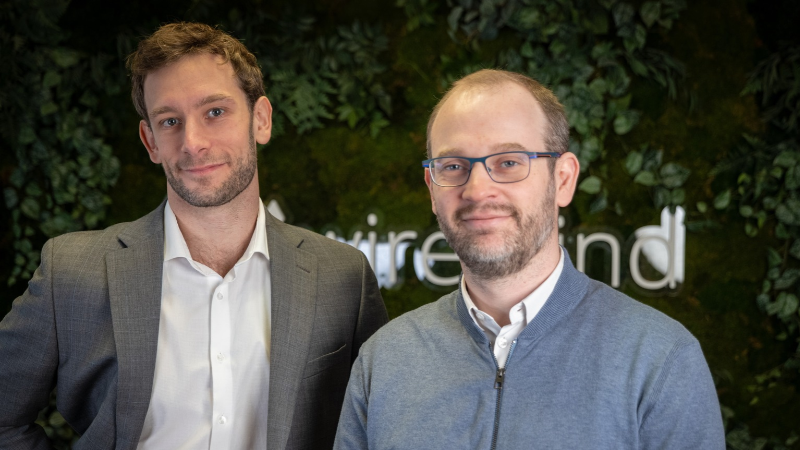
- Andrés Céspedes, Senior Product Owner for CAYZN (Passenger Revenue Optimization).
- Guillaume De Montecler, Head of Product for Cargo Product Suite.
- Hugo Messicat, Head of Product for EVENTORI (Ticketing & Revenue Optimization).
A Continuous Cycle
Product Management at Wiremind is structured as a continuous loop rather than a linear checklist. As Andrés puts it:
"You can think of this as a cycle. We start with the discovery, we go to the delivery, we go through the release and marketing, and then we start all over again."
While the phases remain identical across all three product lines, the day-to-day execution is adapted to each industry's specific needs.
1. Discovery: Starting from the Problem
Before any technical specifications are written, the discovery phase answers four core questions: Will clients use this? Can they understand how to use it? Do we have the technical resources to build it? And does it align with the company's long-term product direction?
"The key thought is: We want to build this capability, but aren’t we cannibalizing another product's roadmap?" notes Guillaume.
Identifying what not to build is a core part of the process. Because our users work in different environments, our discovery methods match their realities:
For the Passenger Product Suites, discovery often start as hand-drawn sketches during brainstorming sessions. The team then uses AI wireframing tools to quickly generate functional mockups, facilitating the communications with the designers and engineers.
For Cargo Products, the team relies on a centralized database of client requests, bug reports, and internal ideas built up over the years. Thousands of records, reviewed every week, that hold everything the team needs to make the product succeed. And as AI tools spread internally, sorting through and acting on all that knowledge keeps getting easier.
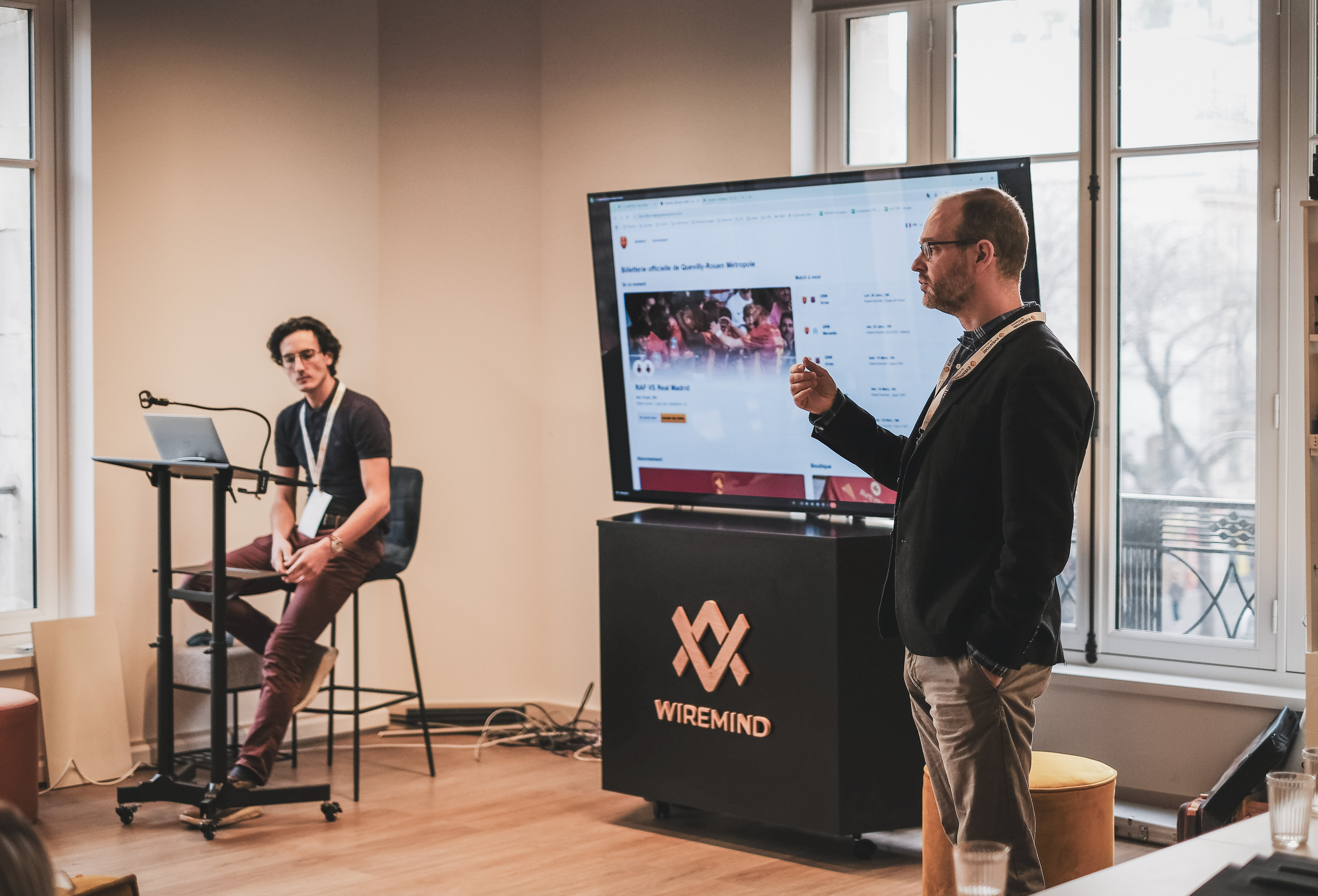
As for EVENTORI product management, discovery happens on-site. The team frequently spends match nights at stadiums and venues to observe how operators manage pricing and crowd capacity in real time.
“The friction points that matter most are rarely the ones users would think to mention in a feedback form”, says Hugo Messicat.
2. Delivery: Structured Prioritization Frameworks
Once the problem is understood, the build begins. To manage resources efficiently, each team uses specific prioritization frameworks:
For Passenger products, the team relies on an ICE Score (Impact + Confidence + Ease) combined with an internal Wiremind Score. This model weights internal business goals, client requests, and development effort to create an objective backlog.
EVENTORI’s product owners (POs), on the other hand, structure prioritization in three layers: a macro-strategic focus assigned per quarter (e.g., Front-Office & Analytics in Q3), project evaluation via the Wiremind Score, and individual task prioritization during sprints.
On the Cargo side, the approach is structured top-down, but built to stay responsive. The annual roadmap, driven by our market vision, shapes our major workstreams, which we call Discoveries internally. Management team orders these by business priority and revisits that order based on client updates, almost every week. So we keep moving on the big bets that take us toward our vision, without losing the flexibility to fix the smaller, day-to-day issues our customers run into.
Across all three industries and, despite the different methods, these frameworks protect engineering time and ensure updates directly improve user workflows.
3. Release & Marketing: Ensuring Practical Adoption
Shipping a feature is the beginning, not the end. Getting users to actually change how they work, especially in industries where operational habits are deeply ingrained.
For the Passenger industry: the team host regular webinars, product release newsletters, and user groups to walk revenue managers through new features, answer technical questions live, and maintain a feedback loop.
Cargo product owners provide detailed release notes, complete with annotated screenshots. Because our product sits at the heart of our customers' daily operations, any unexpected change can carry a real cost for them. They need to see exactly what changed and how it affects their data workflows, and they need to be able to pass that on to their own teams.
Finally for EVENTORI’s releases, POs take a more hands-on approach: live demos using the client's real data, and guided walkthroughs.
"When a club sees their own match data inside a new analytics view during a screen-share, the value lands immediately," confirmed Hugo Messicat.
Three Industries, One Standard
The tools, release cadences, and discovery environments differ across Wiremind’s products. What is urgent for an Air Cargo handler is entirely different from what is urgent for a stadium ticketing manager on game day.
However, the underlying product philosophy remains uniform across Andrés, Guillaume, and Hugo's teams: excellence is not measured by the volume of features shipped, but by how effectively those features solve a specific user problem.
Product management at Wiremind ultimately succeeds when our frameworks adapt to the real-world operational needs of our clients.

.png)


